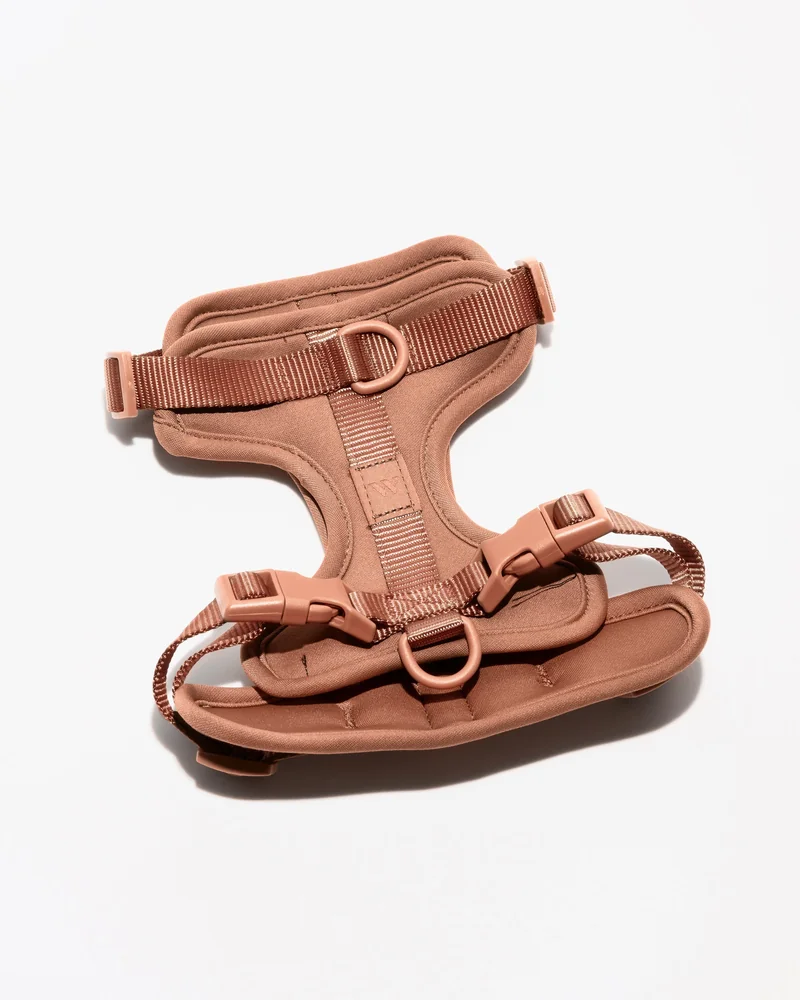
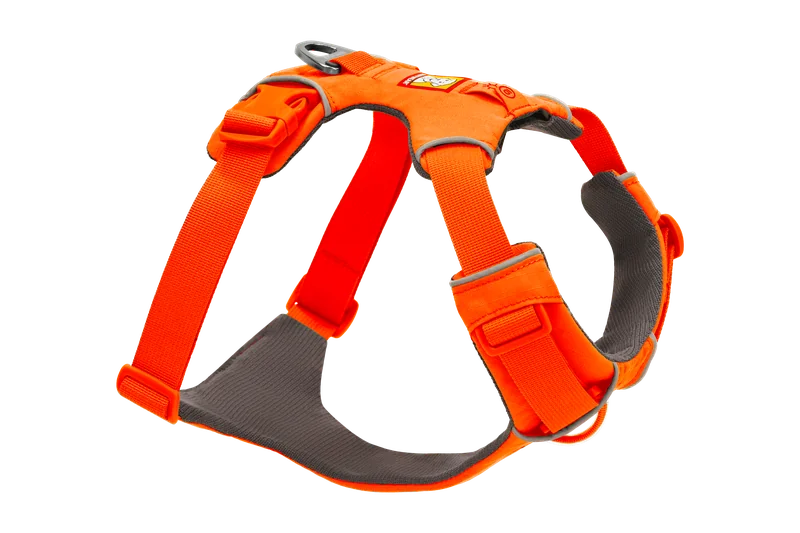
Harness and leash materials
Also appears on labels as: 300d polyester ripstop with 100% recycled content (shell, nonfluorinated dwr and pu coating), pe foam (padding), polyester knit mesh with 100% recycled content (lining), polyester webbing with 30% recycled content, nylon webbing and tpu tube (front leash connection point), anodized 6061-t6 aluminum v-ring (back leash connection point)
What a harness or leash is made of: woven polyester or nylon webbing, mesh and stretch fabric, foam padding, and metal or plastic rings and buckles. Some makers name a buckle by its maker and model rather than its plastic.
Watched ingredients get highlighted on every product panel you open.
- Where it comes from
- Textile mills for the webbing and fabric; the rings and buckles are cast, stamped or molded.
- Why it's in the product
- Strength without much stretch, quick drying, and padding where the harness presses on the chest and back.
- Safety and toxicity
- A harness is worn, not chewed, so the reason we flag synthetic toy materials does not apply. What matters is fit, rubbing behind the front legs, and wear on the rings and buckles. "Nonfluorinated" on a water-repellent finish means it uses no PFAS chemistry.
- Interactions and who should be careful
- A dog that chews its harness is chewing synthetic webbing, and swallowed pieces are a risk. For a chewer, take the harness off between walks.
General reference, not veterinary advice. Dose, breed, and existing conditions change the answer, so talk to your vet before changing what your pet eats. Think we got this wrong? Tell us and we log it publicly.
Found in 2 scored products
Lowest scores first. Its presence here is not what drove those scores.